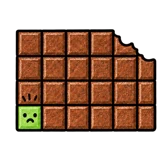
25 kids, one living room
One kid cornered the Reese’s market by trading first. Charleston Chews never moved.
NPR · The Salt · Reporting
Try this
Spot the market ideas: who used supply, who used timing, which candy acted like pennies? Then try one rule at your own trading floor.
A reporter watched 25 kids, most about 11, trade after trick-or-treating. One cornered the Reese’s market by trading early. One worked hard to unload extra candy from her own house. Charleston Chews barely moved at all.
By Kristofor Husted. Open it ↗
Pairs with After the haul
33 → 4.5 minutes of work per bar
The price stayed 5 cents for 69 years. What changed was how long you worked for it.
Human Progress · Analysis
Try this
Find your own time price: how many minutes of chores or allowance pays for one full-size bar? Is candy cheap or expensive for you?
A Hershey bar cost 5 cents from 1900 until 1969. That sounds cheap until you divide by wages: an unskilled worker earned about 9 cents an hour in 1900. By 2022 the bar cost $1.15, but only about 4.5 minutes of work.
By Gale L. Pooley. Open it ↗
Also: Candy prices over the years
Pairs with After the haul
$4.8M vs $10.2M sugar savings vs. wage savings
Two sides, two sets of real numbers, one factory move. Decide who’s right.
NPR · Potato Grower · Two sides
Try this
Both sides used real numbers. What would you need to know to decide who’s right? Who gains from each story?
In 2002 the maker of Life Savers announced it was moving production from Michigan to Canada and blamed high U.S. sugar prices. The sugar growers’ group did its own math: at most $4.8 million a year saved on sugar, but about $10.2 million on wages.
By Jackie Northam (NPR) and the American Sugar Alliance. Open it ↗
Also: The sugar growers’ math
Pairs with Candy trends
$12,000 a ton of cocoa at the 2024 peak
When cocoa hit $12,000 a ton, some candy quietly changed what was inside.
The Guardian · Reporting + data
Try this
Pull the monthly cocoa price yourself from FRED (series PCOCOUSDM). By what percent did it rise from its 2022 average to its peak?
Bad weather and disease in West Africa sent cocoa from about $2,000–3,000 a ton to $12,000. Some candy makers quietly swapped cocoa for cheaper ingredients. This is the story behind our Candy trends chart.
By The Guardian; price data from FRED. Open it ↗
Also: Cocoa price data (FRED)
Pairs with Candy trends
$1 per pound
About 300 dentists did it in 2007. More than 2,500 did by 2014.
NPR · The Salt · Reporting
Try this
Weigh your extra candy. What would a buyback pay you? Now compare with what that candy cost in the store. Who gets the better deal, and why might you still say yes?
A Wisconsin dentist started paying kids $1 a pound for extra candy and shipping it to troops overseas. About 300 dentists joined in 2007. By 2014 it was more than 2,500.
By Allison Aubrey. Open it ↗
Also: Operation Gratitude
Pairs with After the haul
2007 the year daylight saving moved past Halloween
A 2005 law kept Halloween evening lighter. Candy makers were called “winners.”
NBC News · Reporting
Try this
Look up sunset time in your town on October 31. What would it be one hour earlier? How many minutes of daylight trick-or-treating does that change?
A 2005 law pushed the end of daylight saving time into November, so Halloween stayed lighter in the evening. NBC listed candy as a “winner.” The candy industry is widely thought to have lobbied for it; its trade group says that’s not so.
By NBC News. Open it ↗
$13.5B planned Halloween spending, 2026
Every year, thousands of shoppers say what they’ll spend. Candy always tops the list.
NRF · Data hub
Try this
Divide this year’s candy spending by the number of U.S. kids (72 million, from the Census). Is that the cost of one kid’s haul? What’s missing from that math?
Every year the NRF surveys thousands of shoppers about costumes, candy and decorations. Candy is the item the most people buy. The yearly numbers make a great line chart.
By National Retail Federation. Open it ↗
Pairs with Candy trends
630M lb Illinois pumpkins, 2022
Illinois grew 630 million pounds in 2022. Most of it went into cans.
USDA ERS · Government chart · free data
Try this
What fraction of the top six’s pumpkins came from Illinois? Draw it as a pie with six slices (Indiana 160, California 120, Michigan 90, Pennsylvania 90, Virginia 50).
The top six pumpkin states grew about 1.2 billion pounds in 2022, and Illinois grew 630 million of them. Most Illinois pumpkins go into cans, not onto porches.
By Gregory Astill, USDA Economic Research Service. Open it ↗
Also: Why Illinois wins